

When most people think of driver’s education, they picture parallel parking between orange cones or navigating busy four-lane intersections. But if you truly want to master the art of driving, you need to leave the city limits behind.
Learning to drive on rural roads offers a masterclass in vehicle control, observation, and adaptability that you simply can't get on a manicured highway.
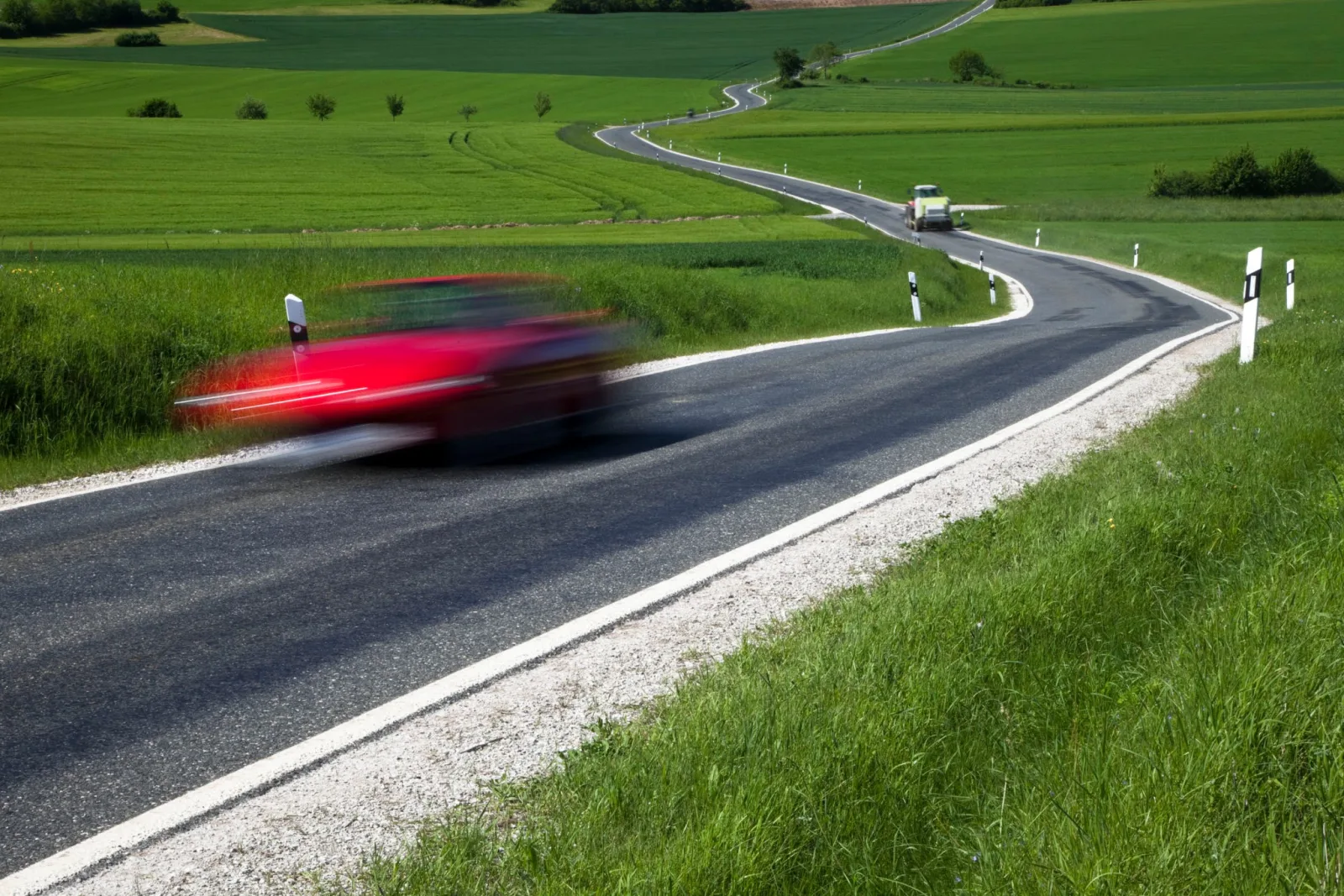
City driving is highly choreographed. You have clear lane markings, glowing traffic lights, and street signs narrating your every move. Rural driving is entirely different—it asks you to read the environment, not just the signs.
Here is what learning to navigate country roads actually teaches you:
Reading the Road Surface: Without pristine blacktop, you quickly learn how a car handles on gravel, packed dirt, or weathered pavement. You start feeling the difference in traction through the steering wheel and the brake pedal.
The Myth of the Speed Limit: Out in the country, a sign might say 60 mph, but a sharp, blind curve ahead might demand 25 mph. Rural driving breaks the habit of driving to the limit and teaches you to drive to the conditions.
Spatial Awareness Without Lines: Many back roads lack a painted centre line. When another vehicle approaches, you have to intuitively know the exact width of your car to share a narrow space safely, often with a ditch just inches from your right tire.
On a highway, the biggest surprise is usually a sudden brake light. On a rural road, the surprises are a little more organic.
Out here, the hazards have a heartbeat. Learning to scan the tree line for deer, spotting a slow-moving tractor cresting a hill, or anticipating a stray dog requires a much wider field of vision than city driving.
You learn to adopt "active scanning." Instead of just staring at the bumper in front of you, your eyes are constantly sweeping the shoulders, the ditches, and the horizon.
City driving teaches you the rules of the road. Rural driving teaches you the physics of your car and the unpredictability of the real world. Once you can confidently navigate a winding, unmarked dirt road at dusk, navigating a standard suburban intersection feels like a walk in the park.
If you are just getting your licence—or if you've been driving for years but rarely leave the city—take a Sunday drive out past the suburbs. The road has plenty left to teach you.